Integration · 9 min read · May 19, 2026
The Data Integration Stack Every Small Business Needs (Without the Enterprise Price Tag)
A practical guide to bringing Shopify, GA4, Mailchimp, and Stripe into a unified data view — covering one-click connections, CSV-based workflows, free and low-cost tools, and what to automate first.
The Data Integration Stack Every Small Business Needs (Without the Enterprise Price Tag)
In today's competitive landscape, small businesses often grapple with a common challenge: data fragmentation. Critical information about sales, marketing, customer behavior, and finances is scattered across various platforms—Shopify, Google Analytics 4 (GA4), Mailchimp, Stripe, and many more. This siloed data makes it incredibly difficult to gain a holistic understanding of business performance, identify emerging trends, or react swiftly to anomalies. The dream of a unified data view often feels out of reach, reserved only for enterprises with vast budgets and dedicated data teams. However, building an effective data integration stack doesn't require an enterprise price tag; it demands a strategic approach to connecting your essential data sources for actionable insights.
The Challenge: Fragmented Data, Missed Opportunities
Small businesses thrive on agility and informed decision-making. Yet, the very tools designed to empower them can inadvertently create data silos. Your e-commerce platform tracks sales, your analytics tool monitors website traffic, your email marketing service manages campaigns, and your payment processor handles transactions. Each system provides valuable insights within its domain, but the real power emerges when these data streams converge.
Why Data Silos Hurt Small Businesses
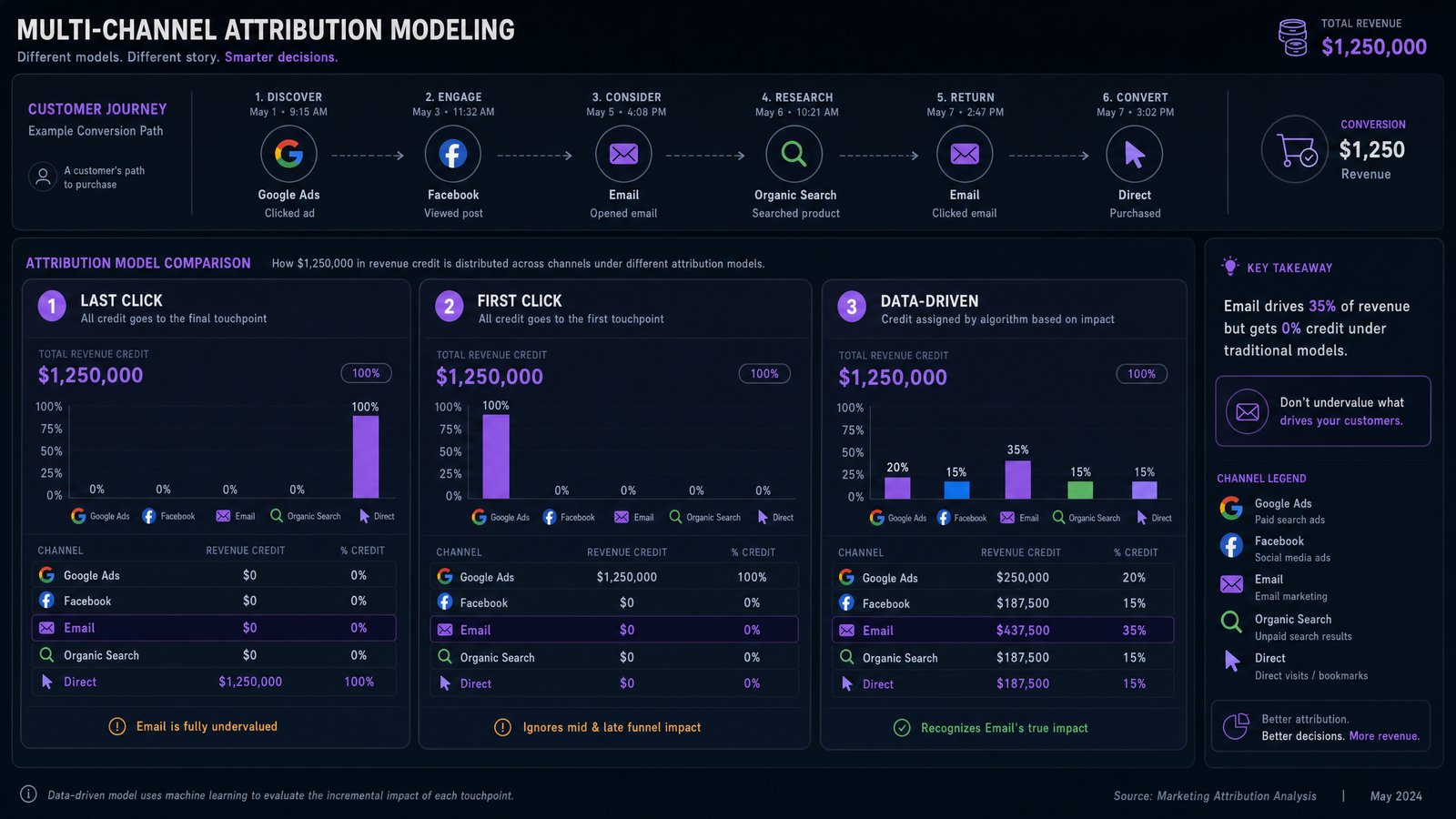
Fragmented data leads to a host of operational inefficiencies and missed opportunities. Without a consolidated view, business owners and managers spend countless hours manually compiling reports, often relying on outdated spreadsheets or incomplete information. This not only wastes precious time but also increases the risk of errors and prevents a clear understanding of cause-and-effect relationships. For instance, how do you accurately attribute a sale to a specific marketing campaign if your sales data and campaign data are in separate systems? How do you identify a sudden drop in customer engagement if your email metrics aren't correlated with your website traffic?
The Dream: A Unified Data View
The aspiration for many small businesses is a unified data view—a single, comprehensive source of truth that integrates all relevant operational data. Such a view enables businesses to track key performance indicators (KPIs) across all functions, identify correlations between different aspects of their operations, and make data-driven decisions with confidence. It's about moving beyond reactive problem-solving to proactive strategy, driven by a clear, real-time understanding of what's truly happening across the business.
Building Your Lean Data Integration Stack
Creating a robust data integration stack for a small business doesn't mean investing in complex, expensive enterprise software. It means being smart about leveraging existing tools, understanding your data needs, and prioritizing automation where it delivers the most value. The goal is to bring your core platforms together—one-click connections for Shopify and Mailchimp, CSV or Excel uploads from GA4, Stripe, and everything else—to create that much-needed unified data view.
Essential Data Sources for Small Businesses
For most small businesses, a few key platforms form the backbone of their operations:
- Shopify (or similar e-commerce platform): Provides crucial sales data, customer information, product performance, and inventory levels.
- Google Analytics 4 (GA4): Offers deep insights into website traffic, user behavior, conversion paths, and marketing channel effectiveness.
- Mailchimp (or similar email marketing service): Tracks email campaign performance, subscriber engagement, and audience growth.
- Stripe (or similar payment gateway): Manages transaction data, revenue streams, refunds, and customer payment histories.
These platforms generate a wealth of data, but their true potential is unlocked when they communicate with each other.
Bridging the Gaps: Free and Low-Cost Integration Strategies
Before diving into advanced solutions, consider these practical, budget-friendly approaches to integrate your data:
- CSV-Based Workflows: For smaller data volumes or less frequent updates, exporting data as CSV files from one platform and importing it into another can be a manual but effective starting point. This is particularly useful for one-off analyses or populating simple dashboards.
- Native Integrations: Many platforms offer built-in integrations with other popular services. Check if Shopify natively connects with Mailchimp, or if Stripe has direct reporting features that can be exported. These are often the easiest to set up and maintain.
- Basic Connectors/Middleware: Tools like Zapier or Make (formerly Integromat) offer free or low-cost tiers that allow you to automate simple data transfers between applications. For example, you could set up a "Zap" to automatically add new Shopify customers to your Mailchimp audience.
When to Automate: Prioritizing Your Data Flow
The decision of what to automate first should be driven by the frequency and criticality of the data. Prioritize connections that:
- Reduce significant manual effort: If you're spending hours each week copying data, automate it.
- Impact critical business decisions: Ensure your most important KPIs are updated regularly and accurately.
- Enable real-time insights: For fast-moving businesses, near real-time data can be a genuine advantage.
Focus on automating the flow of data that will provide the quickest path to a unified data view and enable more effective actionable recommendations.
Introducing DawnPulse: Your AI-Powered Unified Data View
While manual and low-cost solutions are a great start, scaling your data insights requires a more sophisticated yet accessible approach. This is where DawnPulse steps in, offering a powerful, AI-driven solution designed specifically for small businesses to achieve a comprehensive data integration stack without the complexity or cost of enterprise systems.
One-Click Connections and Simple Uploads: Bringing Your Core Platforms Together
DawnPulse simplifies the process of bringing all your critical data together. It connects Shopify, Mailchimp, and HubSpot in one click — data syncs automatically every day — and reads CSV or Excel exports from any other tool, including Google Analytics 4 (GA4), Meta Ads, Stripe, LinkedIn Ads, X, WooCommerce, and Zendesk. If you can export it, DawnPulse can read it. This ensures that all your disparate data sources are consolidated into a single, coherent system, forming the foundation of your unified data view.
Beyond Dashboards: Daily Briefings and Anomaly Detection
Unlike static dashboards that require constant interpretation, DawnPulse provides an AI-powered daily briefing. Each briefing goes beyond mere data aggregation, offering an intelligent plain-English summary of your business performance. Crucially, the platform incorporates advanced anomaly detection capabilities. This means it automatically flags unusual spikes or drops in your data—be it a sudden surge in sales, an unexpected dip in website traffic, or an anomaly in marketing spend—alerting you to critical changes that demand your attention.
From Insights to Action: Actionable Recommendations
The true value of data lies in its ability to drive better decisions. DawnPulse doesn't just present data; it translates insights into concrete, actionable recommendations. Based on its analysis of your integrated data, the AI suggests specific steps you can take to optimize campaigns, improve customer engagement, or address performance issues. This transforms raw data into a strategic asset, guiding your business towards growth and efficiency.
The Enterprise Experience, Without the Enterprise Price Tag
DawnPulse democratizes access to sophisticated business intelligence. It provides the kind of comprehensive data integration, advanced analytics, and proactive insights typically associated with large enterprises, but packaged in an intuitive, affordable solution tailored for small and medium-sized businesses. It’s a complete data integration stack that empowers you to compete effectively, armed with the same level of data understanding as much larger organizations.
Realizing the Benefits: What a Unified Data View Delivers
Implementing a well-structured data integration stack with a tool like DawnPulse yields tangible benefits that directly impact your bottom line and operational efficiency.
Smarter Decisions, Faster Growth
With a unified data view, you gain unparalleled clarity into your business. You can quickly identify which marketing channels are most profitable, understand customer lifetime value across different segments, and pinpoint operational bottlenecks. This clarity leads to smarter, more confident decisions, enabling faster and more sustainable growth. The ability to receive actionable recommendations daily means you're always optimizing and never missing an opportunity.
Time Savings and Operational Efficiency
Automating your data integration eliminates the tedious, error-prone process of manual data compilation. This frees up valuable time for you and your team to focus on strategic initiatives, customer engagement, and product development, rather than data wrangling. The proactive nature of anomaly detection also means you can address issues before they escalate, saving resources and preventing potential losses.
Conclusion
For small businesses, a robust data integration stack is no longer a luxury but a necessity. The ability to connect disparate data sources into a unified data view provides the clarity and foresight needed to navigate today's dynamic market. DawnPulse offers an accessible, AI-powered solution that brings enterprise-level insights—including the daily briefing and actionable recommendations—within reach of every small business. Stop letting fragmented data hold you back. Discover the power of integrated insights and propel your business forward.
Want to see it in action first? Take the DawnPulse product tour, then start your 14-day free Pro trial and transform your data into your greatest asset.